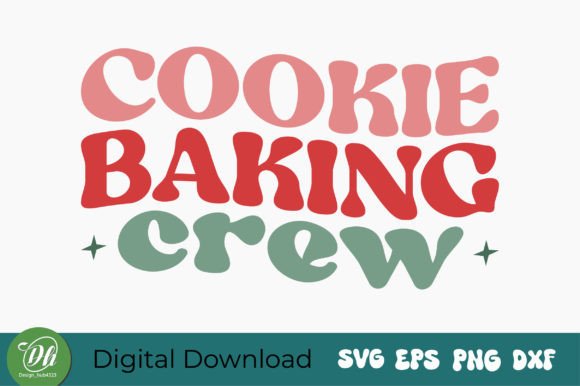
Cookie Baking Crew Retro SVG Review
As a designer who spends more time looking at stitch lines than actual cookies, I approach every new digital asset with a mix of excitement and skepticism. The market is flooded with generic clipart, so finding a design that balances aesthetic charm with technical viability for embroidery is rare. I recently evaluated the Cookie Baking Crew Retro SVG to see if it holds up under the scrutiny of real-world production. This isn’t just about how it looks on a screen; it’s about how it translates to thread, fabric, and ultimately, a finished product that customers will actually want to wear or display.
First Impressions and Visual Personality
The immediate appeal of this machine embroidery design lies in its nostalgic warmth. The retro styling suggests a mid-century modern influence, which has seen a massive resurgence in home decor and apparel. When I first loaded the file into my digitizing software, the layout felt balanced. It doesn’t scream for attention but rather invites the viewer in. For a craft business owner, this is crucial. You want designs that feel curated, not cluttered.
The theme of a "baking crew" lends itself perfectly to community-focused branding. Whether you are targeting stay-at-home parents, professional bakers, or simply people who love cozy aesthetics, this design hits the right emotional notes. It feels like a personalized gift that acknowledges a hobby rather than just slapping a logo on a shirt. The visual personality is friendly, approachable, and slightly whimsical, which makes it versatile across different demographics.
Real-World Application: From Screen to Stitch
Let’s talk about practical use. I imagine this design thriving on specific products where texture and comfort matter. A soft, heather gray sweatshirt embroidered with this retro cookie motif creates an instant sense of comfort. It works exceptionally well as sweatshirt embroidery because the relaxed fit complements the casual, fun nature of the graphic.
However, the true test for any embroidery file is detail retention. In my experience, intricate line art often gets lost when stitched onto thick fabrics like fleece or heavy canvas. If this design relies heavily on fine lines, it might struggle on a textured tote bag. But if the design utilizes bold shapes and solid fills, it will pop beautifully. For a tote bag design, especially one made from natural cotton duck canvas, the contrast between the thread and the fabric weave will enhance the retro vibe. It becomes a statement piece that signals creativity and craftsmanship.
I also see strong potential in the nursery and baby market. Baby embroidery is a huge sector for small shops. A onesie or a muslin blanket featuring this baking theme could be a standout item for baby showers. Parents love gifts that are both adorable and meaningful. The retro style avoids being overly childish, making it appealing to millennial and Gen Z parents who appreciate vintage aesthetics. This versatility allows an Etsy seller to target multiple niches without needing completely different inventory strategies.
Where Caution Is Required
No design is perfect for every surface. There are scenarios where this digital embroidery file might present challenges. If you plan to place this on a curved surface like a baseball cap, you need to ensure the design’s curvature aligns with the hat’s shape. A flat, wide design might look distorted on a small hoop size typical for caps.
Furthermore, consider the fabric texture. Embroidering on highly textured fabrics, such as waffle knit towels or bouclé blankets, can obscure the finer details of the design. The needle might catch on the loops, leading to skipped stitches or uneven tension. Similarly, stretchy fabrics like jersey knits require careful stabilization. Without proper support, the stitch density of the design could pucker the fabric, ruining the professional look of the final product.
Dark fabrics also demand attention. If the design uses light-colored threads for shading or highlights, they may disappear against a black background. Always check your thread colors against your chosen fabric before committing to a full run. Testing on scrap pieces is non-negotiable. It saves money, time, and reputation.
Technical Considerations for Designers
For those of us digitizing or preparing these files for clients, several technical aspects must be reviewed. First, inspect the stitch density. Is the fill stitch too dense? Excessive density can make the fabric stiff and uncomfortable, especially on items like aprons or pillow covers that need to remain soft. A good machine embroidery design should balance coverage with breathability.
Check the smallest elements. Are there tiny letters or thin decorative accents? These are prone to breaking or tangling during high-speed stitching. If the design includes running stitch for outlines, ensure the length is appropriate for the fabric type. Too long, and it looks sloppy; too short, and it risks puckering. Also, verify the hoop size. Ensure your machine can accommodate the design dimensions without requiring re-hooping, which introduces alignment errors.
Another critical step is reviewing the design in black and white. This helps assess the value contrast. If the design relies solely on color differences to distinguish shapes, it may lack impact when viewed from a distance or printed as a mockup. Strong silhouettes are key for recognition and brand consistency.
Impact on Product Value and Customer Trust
Using a well-executed design like the Cookie Baking Crew Retro SVG elevates the perceived value of your handmade products. Customers can often tell the difference between a mass-produced print and a carefully stitched embroidery. The tactile quality of thread adds depth and luxury. When a buyer receives a finished product that looks professionally finished, it builds trust in your brand. They are more likely to leave positive reviews and return for future purchases.
For commercial embroidery projects, consistency is everything. This design offers a cohesive look that can be part of a larger collection. Imagine a set of matching kitchen towels, an apron, and a tote bag all featuring variations of this theme. Such coordinated sets are highly desirable for gifts and boutique branding. They create a narrative around your shop, positioning you as a specialist in cozy, retro-inspired home goods.
Practical Tips for Success
- Test on Scrap Fabric: Never assume a design will work perfectly on your final material. Test stitch it first.
- Check Stabilizer Choice: Use the correct stabilizer (cut-away, tear-away, or wash-away) based on the fabric’s stretch and weight.
- Review Licensing: Before selling finished items, confirm the license terms. Some design assets allow commercial use, while others do not. Clarity here protects your small shop product business.
- Create Printable Mockups: Use high-quality mockups to visualize the design on different products. This helps in marketing and setting customer expectations.
- Inspect Small Details: Zoom in on the vector file to ensure no stray points or overlapping paths exist that could cause digitizing errors.
In conclusion, the Cookie Baking Crew Retro SVG shows promise as a versatile and charming addition to an embroidery designer’s toolkit. Its retro aesthetic appeals to current trends, and its thematic flexibility allows for a wide range of applications, from holiday embroidery gifts to everyday custom apparel. By paying close attention to technical details like stitch density, fabric choice, and stabilization, designers can transform this digital file into a tangible, high-quality product that resonates with customers. For the savvy maker, it represents an opportunity to create meaningful, personalized gifts that stand out in a crowded marketplace.