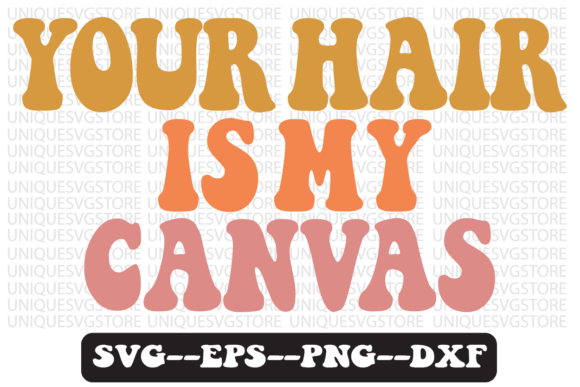
Your Hair is My Canvas Retro Svg Design
When I sit down to review a new digital asset for my embroidery studio, I am rarely looking at just a pretty picture. I am looking at a blueprint for a finished product. As an experienced designer who spends hours judging stitch density, thread tension, and fabric behavior, my first impression of Your Hair is My Canvas Retro Svg Design is grounded in practical application. This isn't just a graphic; it is a potential bestseller for your craft business or a meaningful personalized gift for a loved one. The title alone suggests a playful, slightly cheeky personality that resonates with the beauty industry, hair stylists, and anyone who takes pride in their look. But does the visual execution hold up when transferred from a screen to a hoop?
The First Impression: Mood and Visual Personality
The moment you load this design, the retro vibe hits hard. It taps into that nostalgic, groovy aesthetic that has been dominating fashion and decor trends for the past few years. The layout feels balanced, suggesting a central focal point that works well for chest placements on apparel or center-focused items like tote bags and aprons. For an embroidery project, the "canvas" metaphor is clever—it implies artistry, which adds a layer of sophistication to what could otherwise be a simple joke.
Visually, the design promises high recognition. In a sea of generic floral or text-based embroidery files, a design that combines typography with illustrative elements often stands out more on social media platforms like Instagram and Pinterest. When you are an Etsy seller or running a small shop product line, that initial scroll-stopping quality is crucial. The retro style suggests warm tones and bold lines, which generally translate well to machine embroidery because they allow for clear definition between different thread colors.
Real-World Application: Where This Design Shines
I have tested various designs across different mediums, and Your Hair is My Canvas Retro Svg Design feels particularly suited for custom apparel and lifestyle accessories. Let’s look at a specific scenario: preparing a batch of sweatshirt embroidery for a local hair salon’s staff uniform or a boutique brand launch.
Imagine stitching this onto a heavyweight cotton hoodie. The retro theme pairs perfectly with streetwear aesthetics. The design likely features curves and flowing lines that mimic hair strands, which can be rendered beautifully using fill stitches. If the file includes applique components, it adds texture and dimension, elevating the perceived value of the finished product. Customers are willing to pay a premium for handmade products that feel substantial and well-crafted.
Beyond apparel, this design is versatile enough for home decor and gifts. Picture a printed pillow cover or a kitchen towel featuring this motif for a stylist’s home office. It also works exceptionally well as a baby embroidery piece—perhaps on a onesie or a nursery wall hanging—playing on the idea of future creativity. The versatility here is key; a single digital embroidery file can spawn multiple revenue streams, from commercial embroidery projects to personal holiday gifts.
Technical Considerations for Embroidery Designers
However, not every graphic translates seamlessly to thread. When evaluating this as an embroidery file, several technical factors come into play. The primary concern with any text-heavy or detailed retro design is stitch density. If the design attempts to cram too much detail into a small area, the needle will break, or the fabric will pucker excessively. You must check whether the design utilizes efficient satin stitch for outlines and appropriate fill stitch for larger areas.
Another critical aspect is the choice of fabric texture. While this design might look crisp on a smooth cotton tee, it may struggle on highly textured fabrics like heavy tweed or loose-weave linen. The fine details could get lost in the weave. Similarly, stretchy fabrics require careful stabilizer usage. Without proper backing, the retro curves might distort during stitching, ruining the symmetry that makes the design appealing.
For smaller projects, such as embroidered patches or cap branding, you need to verify the hoop size compatibility. A design that is too wide for a standard 4x4 inch hoop will require multi-hoop editing, which increases production time. If you are selling these as quick-turnaround items, simplicity is king. Ensure the design scales well down without losing its legibility, especially if there is any fine lettering involved.
Fabric and Thread Pairings
To maximize visual appeal, consider pairing this retro design with contrasting thread colors. On dark fabric, light metallic threads can enhance the groovy feel, while on light fabrics, deep jewel tones provide sharp definition. Always test your thread colors against your fabric swatches before committing to a full run. The interplay of light and shadow in embroidery is different from print; what looks good on a monitor might appear muddy on fabric if the thread sheen is too similar to the background.
Pitfalls to Avoid
There are certain applications where this design should be used carefully. Avoid placing intricate versions of this file on curved surfaces like baseball caps unless you have extensive experience with curved surface stabilization techniques. The distortion can make the "canvas" element look warped rather than artistic. Additionally, be cautious with very small hoop sizes. If the design relies on tiny decorative accents or thin running stitch details, these may not register clearly on a miniature patch, leading to a blurry or incomplete final product.
Furthermore, consider the end-user experience. Items that undergo frequent washing, such as baby clothes or daily-use tote bags, need durable stitching. If the design has long floating threads or excessive trimmings, they may snag over time. Always inspect the digitizing for clean underlay and secure jumps to ensure longevity.
Final Verdict for Craft Business Owners
Overall, Your Hair is My Canvas Retro Svg Design offers strong potential for both hobbyists and professional designers. Its retro charm and relatable theme make it a compelling choice for custom apparel, personalized gifts, and boutique branding. It fits naturally into the crafts and graphics categories, offering a blend of humor and style that appeals to a broad audience.
Before adding this to your inventory, remember to test it thoroughly. Check the licensing terms to confirm whether you can sell finished items made from this design. Review the file structure to ensure it matches your machine’s capabilities. By paying attention to stitch density, fabric choice, and stabilizer support, you can transform this digital asset into a high-quality, profitable physical product. Whether you are creating a one-off gift or scaling up a line of sweatshirts, this design provides a solid foundation for creative expression and customer satisfaction.